SUD2023083318
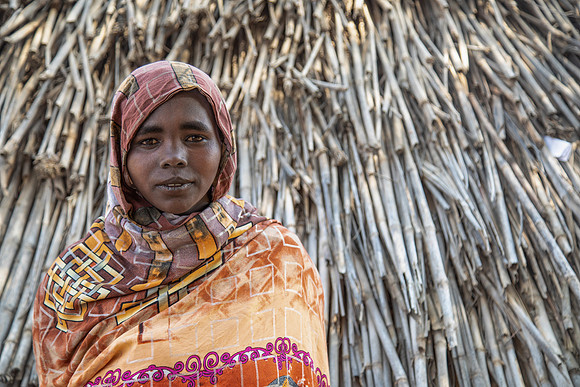
Daralsalam Yahya is a farmer and mother of 7 children in Haraza village, West Darfur, Sudan. She is part of a savings and internal lending communities (SILC) group, and she received nutrition training as well as agriculture support in the form of seeds, tools, and farming techniques training.
“The first time I applied those agricultural techniques and the production increased I was very happy because I had more crops and my children could eat more. Before they would eat twice a day, and now three times a day. “
“Before my children were weak and had bad health. They had diarrhea and fever. After I started giving them vegetables their health changed, they are healthier now and have no fever, and diarrhea is reduced.”
“I feel very happy for as long as my children are healthy.”
“I received a donkey plough and the irrigation pump that are shared with others. Before, I had to do it manually and could only cover a small area. Now, I can plough a very big size. Because of the larger size of land I can work, my production increased too. My children eat and I sell some in the market to pay for school fees.”
“I have been in the SILC group for 7 years and I was able to buy 2 goats, I purchased clothes for my kids, and I can pay school fees.”
Twenty years after the conflict between government security forces and armed movements erupted in Darfur and three years since the signing of the peace agreement, the region is fraught with conflict and other security incidents posing risks and threats to civilians. In Darfur, natural resource competition and conflict around farmer-herder interactions, which centre on access to water and land, regularly spiral into violence. Institutions lack the capacity and coordination mechanisms to address climate-and conflict-related risks, and community resilience to respond to climate change and conflict is low. These trends create food insecurity and hinder the capacity of the community to access livelihood opportunities that accelerate recovery and self-reliance.
Catholic Relief Services (CRS), with support from USAID’s Bureau of Humanitarian Assistance and through a consortium of partners, implements the Recovery in Sudan for Improved Nutrition and Growth (RISING III) to address emergency food security needs, strengthen social cohesion, and build resilience for vulnerable communities in Darfur. CRS works to assist returnee and resident households in 59 communities across all five states of Darfur to transition from emergency assistance to longer-term recovery programs through disaster risk reduction, agriculture, nutrition, and livelihood activities. RISING III promotes interventions that builds sustainability of inputs, services and assets. The program focuses on capacity development to improve the socio-economic governance of the assets that are already developed. Targeting for natural resource management and governance activities, vulnerable communities are targeted for agriculture, health and nutrition activities through skills transfer, peacebuilding and inclusive natural resource management structures. Over 10,000 households have benefited from improved agriculture and food security activities and over 28,000 households benefit from nutrition services.
Photo by Carlos Barrio/Catholic Relief Services